DHL Express told its U.S. account holders on September 25 that rates rise an average of 5.9% on January 1. FedEx set the same 5.9% average for January 4, Supply Chain Dive reported. Nobody in your building can negotiate a general rate increase away.
What you can change is the work wrapped around each label. Someone checks the address and picks the service. Someone keys the customs paperwork, books the pickup, and chases the late box. Carrier API automation hands those keystrokes to software, so your people keep the calls that need judgment.
Most integrations stop at rates, labels, and tracking. We covered that layer, and whether to rent it or own it, in our direct carrier API integration guide. This piece is about reach. UPS, FedEx and DHL publish far more than those three calls.
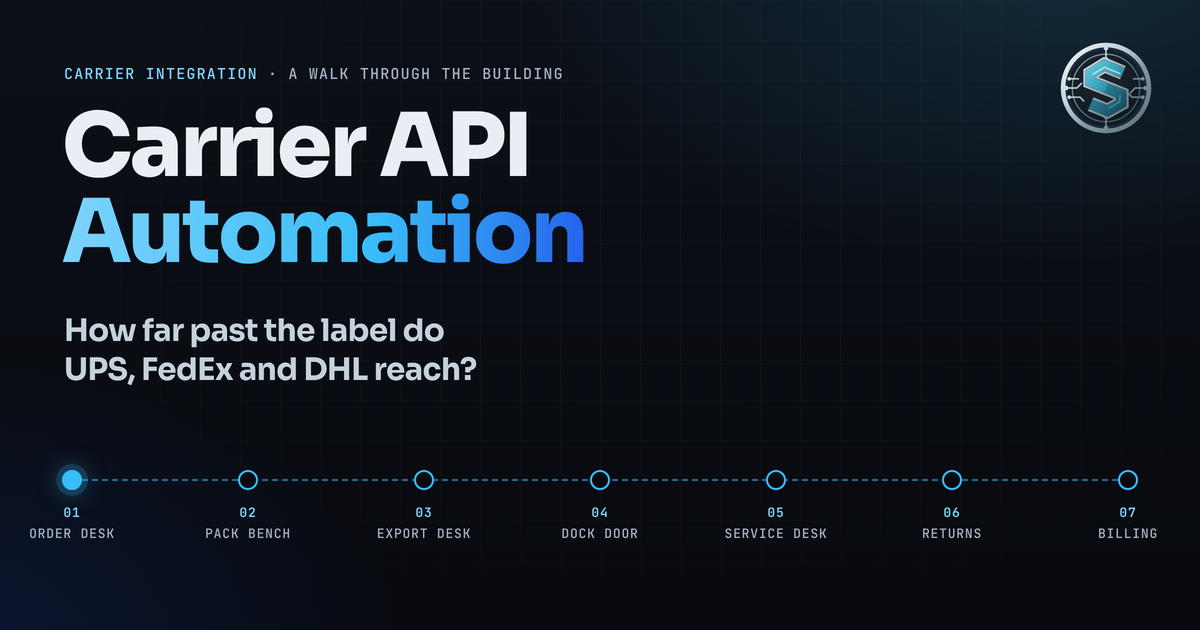
So let's walk the building. We'll start where the order lands and finish where the invoice gets paid. In each room, we'll note which carrier calls can take a task off someone's desk.
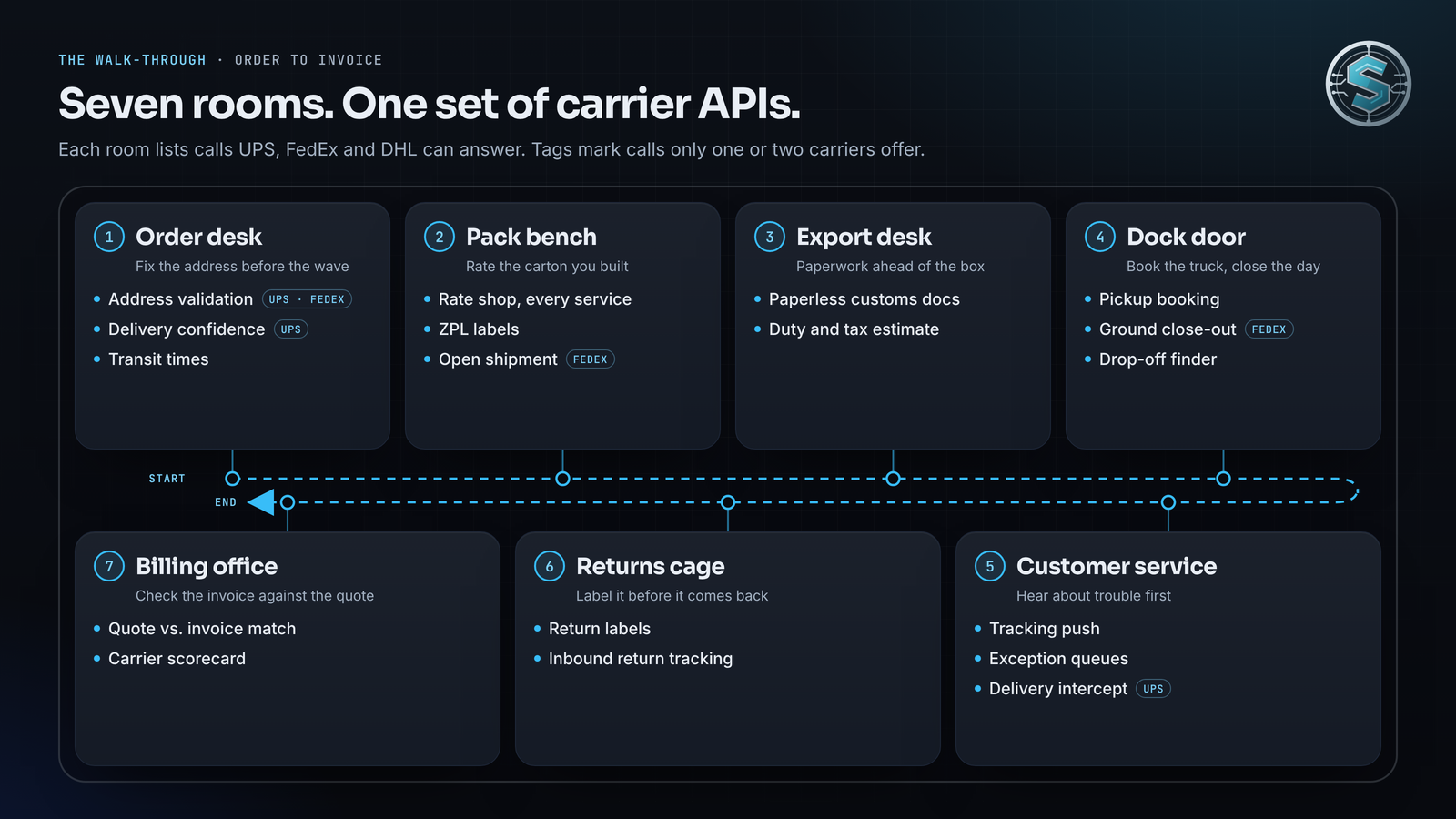
The order desk: fix the address before the wave
The cheapest place to catch a bad address is before anyone picks the order. After the box ships, the fix comes back as an adjustment on the carrier invoice.
Three checks can run the moment an order drops:
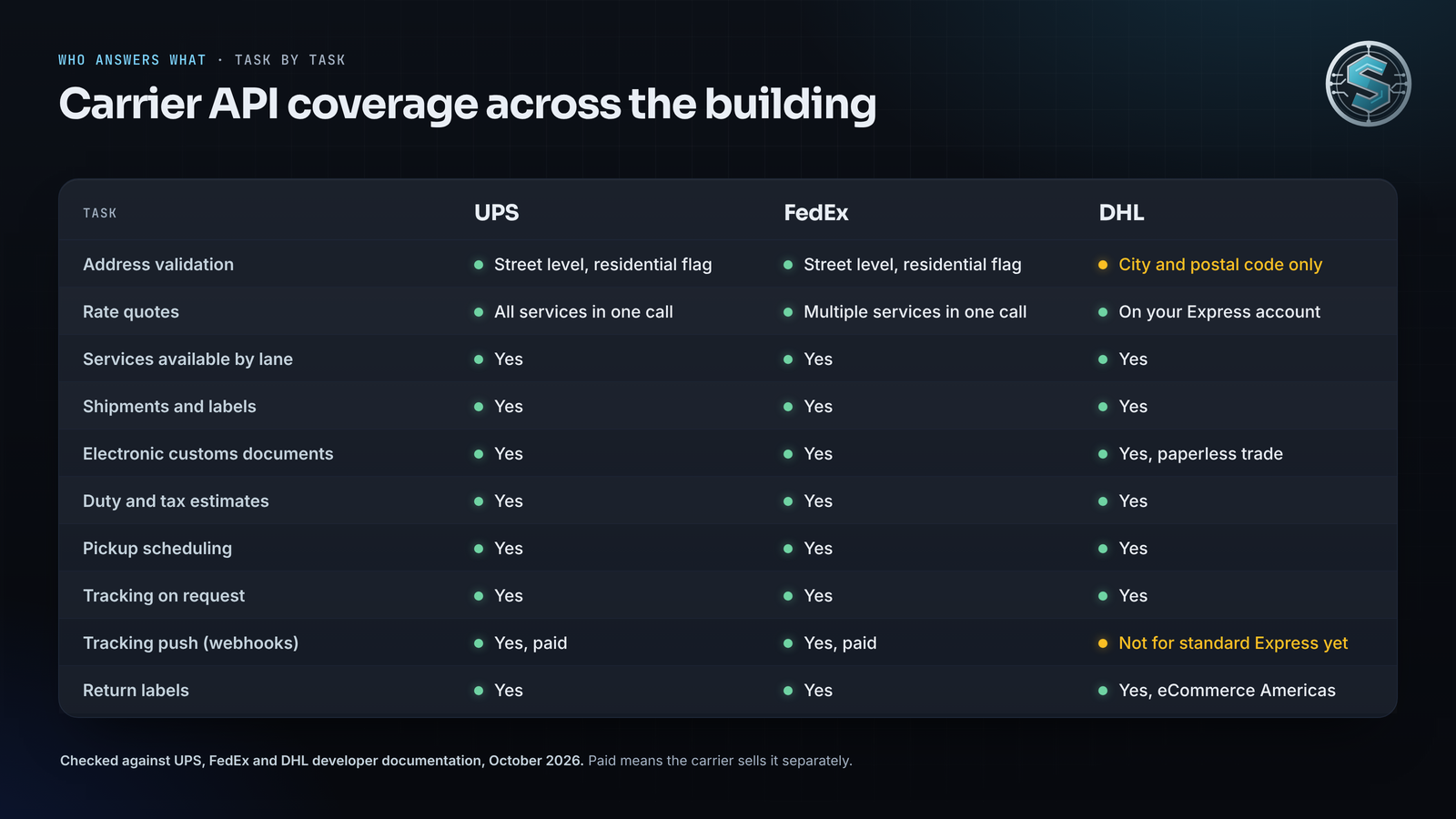
- Street-level validation. UPS Address Validation and the FedEx Address Validation API correct addresses and can flag them residential or commercial. That flag decides whether residential charges apply, and FedEx is raising its residential delivery charge for 2027.
- Delivery confidence. UPS sells a DeliveryDefense Address Confidence API that scores an address from 100 to 1,000. A low score can send the order to a person before release.
- Promise dates. UPS Time in Transit and the FedEx Service Availability API return the services and transit times between two points. Your order screen can show a real arrival date instead of a guess.
Store that residential flag on the order itself. The rate request and the invoice check should read the same value.
DHL needs a footnote. The MyDHL API's address check confirms DHL Express serves a postal code and city. It does not verify the street. Run a street-level check first on anything headed to DHL.
The pack bench: rate the carton you actually built
The order planned for one box. The packer chose a bigger one. Rate shopping belongs at the bench, against the carton that will ship. Carriers bill the greater of actual and dimensional weight, so the dimensioner matters as much as the scale.
When the scale and dimensioner report, your system can ask every carrier at once:
- UPS Rating has a Shop option that prices every service in one call. Its Shoptimeintransit option adds transit times.
- The FedEx Rates and Transit Times API returns multiple services when you leave the service type out.
- The MyDHL API quotes your DHL Express account rates.
Software picks the cheapest service that still meets the promise date. It writes the choice, and the reason, to the order. All three carriers return labels in ZPL, so the label prints straight to the thermal printer.
Multi-carton orders get help too. The FedEx Open Ship API adds packages to one shipment as each carton closes. If the printers themselves are the bottleneck, that is a different fix. Here is how we got eight label printers to stop locking up.
The export desk: send the paperwork ahead of the box
International cartons carry the most typing. Commercial invoices, harmonized codes, and duty estimates often get keyed twice.
Each carrier will take that paperwork electronically:
- UPS. The Paperless Document API uploads commercial invoices and attaches them to a shipment. The Landed Cost Quote API estimates duties, taxes, and brokerage fees.
- FedEx. The Trade Documents Upload API sends customs documents ahead. The Global Trade API lists the documents a lane requires before you ship.
- DHL Express. MyDHL returns a commercial invoice with the label on request. It also estimates landed cost from harmonized codes and accepts paperless trade images before pickup.
Keep harmonized codes on the item master, not in someone's notes. Then every carrier call reads the same code.
Timing makes this more pressing. FedEx is adding a per-shipment fee for paper trade documents in 2027. We broke that down in our FedEx paper document fee article.
The dock door: book the truck and close the day
Pickups still get booked by phone more often than anyone admits. A lead watches the staging lanes and calls when they look full.
The APIs can watch the lanes instead. The UPS Pickup API schedules, cancels, and rates pickups. The FedEx Pickup Request API checks availability, then schedules or cancels. MyDHL creates, updates, and cancels DHL Express pickups. When packed volume crosses a threshold, software books the extra truck. The lead gets a notice instead of a chore.
Close-out works the same way. The FedEx Ground End of Day Close API closes the day's Ground shipments and prints the driver's manifest. FedEx says that manifest must print before Ground shipments are tendered.
If a truck still gets missed, three locator APIs find the nearest drop-off: UPS Locator, FedEx Locations Search, and DHL Location Finder.
The customer service desk: hear about trouble first
Most tracking setups poll. A script asks about every open shipment on a timer, and most answers say nothing changed. Push flips that around. The carrier calls you when something happens.
Here is where each carrier stands today:
- UPS. Track Alert pushes events for subscribed tracking numbers to your webhook for up to 14 days. It is billed per tracking number.
- FedEx. Advanced Integrated Visibility pushes events to your server for a monthly fee. The polling API, once called the Track API, is now Basic Integrated Visibility.
- DHL. The Shipment Tracking Unified Push API covers several DHL divisions, but not standard DHL Express yet. Express tracking is still a polling job.
Keep a slow poll running behind every webhook anyway. If a feed goes quiet, someone should hear about it before a customer does.
Events should land in queues with owners, not one shared inbox. On our inbound freight visibility project, four carrier lanes refresh every ten minutes. Carrier holds, wrong destinations, and late freight each get their own queue. Once a person moves a shipment, the software leaves it alone. People handle the exceptions. Software handles the watching.
Some fixes go back to the carrier. UPS sells a Delivery Intercept API that can redirect an undelivered domestic package, return it to sender, or hold it for pickup.
The returns cage: make the label before the box comes back
A return label created when the return is approved tells your dock what is coming.
UPS builds printed and electronic return labels into its Shipping API. The FedEx Ship API makes Print Return and Email Return labels, plus Return Tags, where the driver brings the label. DHL eCommerce Americas offers a Return Label API for parcel shippers in the U.S. and Canada.
Put the return authorization number in the label's reference field. One scan at receiving then opens the right order.
Track each return like inbound freight. Receiving sees it coming before the trailer opens.
The billing office: check the invoice against the quote
Here is a gap worth knowing. Neither UPS nor FedEx lists an invoice API in its developer catalog. Billing data arrives as EDI or downloadable files.
That file is still worth automating. Save the rate response at label time. When the invoice file lands, match every line to its quote. Flag address corrections, residential adjustments, and dimensional reweighs. A person reviews the flags, not every line.
The tracking events feed a scorecard too. Compare the promise date from ship time with the delivery scan. On-time performance by carrier, lane, and service then builds itself in a 3PL reporting layer.
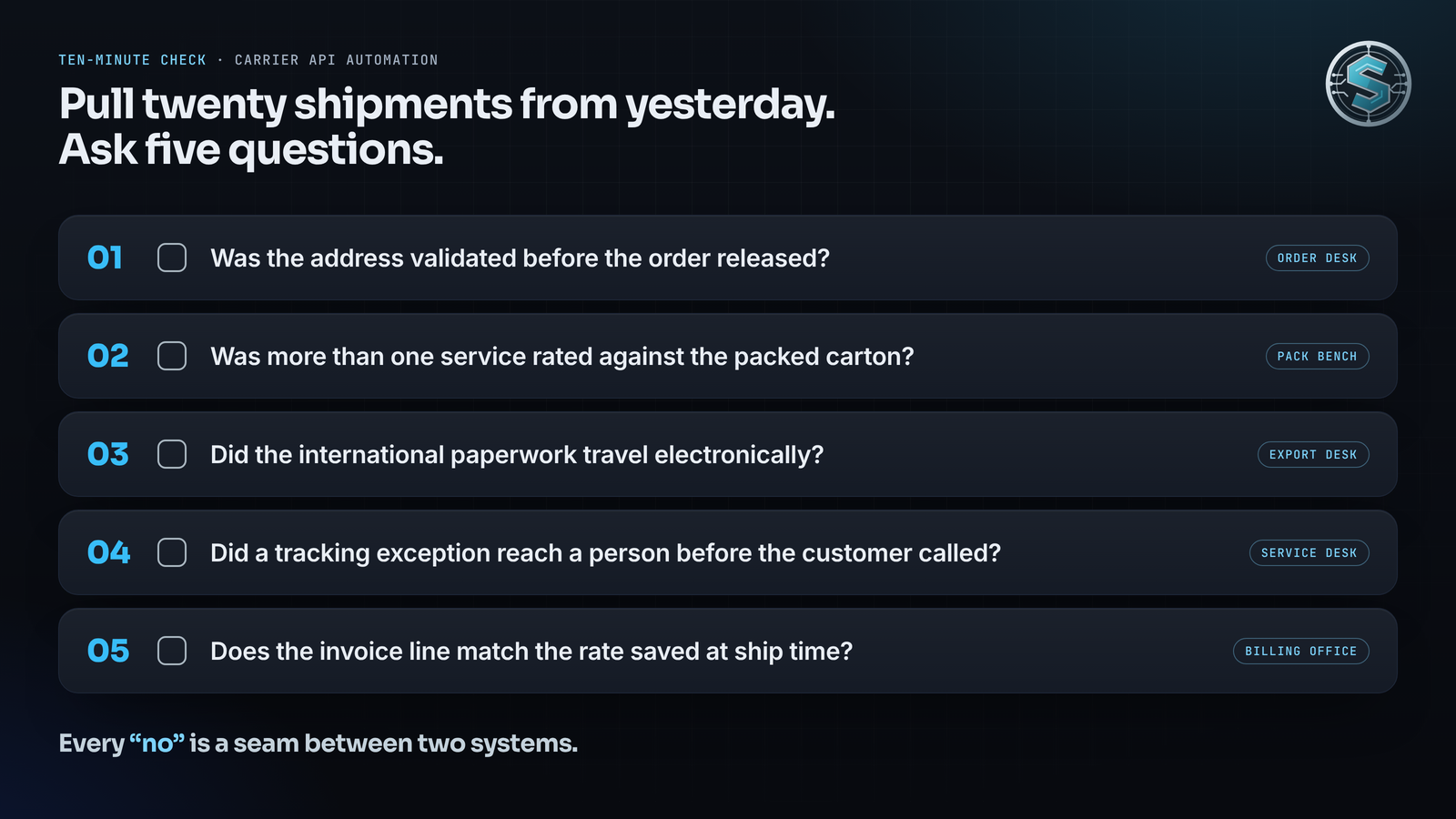
A ten-minute carrier API automation check
Pull twenty shipments from yesterday. For each one, ask five questions:
- Was the address validated before the order released?
- Was more than one service rated against the packed carton?
- Did the international paperwork travel electronically?
- Did a tracking exception reach a person before the customer called?
- Does the invoice line match the rate saved at ship time?
Every "no" marks a seam between two systems. Someone bridges it by hand today, and they shouldn't have to. That seam is a missing connection, not a people problem.
If the check finds more seams than you want to wire yourself, our carrier integration practice builds this layer on the systems you already run. You own the code, and the work is fixed price, quoted up front.